8/31/2025/3 minutes to read/Tags: CVEs, XSS, i-Educar
Introduction
While exploring i-Educar system, I discovered multiples stored XSS vulnerabilities in the /module/FormulaMedia/edit endpoint. The nome and formulaMedia parameters, allows the injection of malicious scripts without any sanitization.
These scripts are stored in the database and executed automatically when the /module/FormulaMedia/index page is accessed.
In this post, I’ll walk you through the technical details, how the vulnerability was exploited (PoC), screenshots with real evidence, and the security risks it represents in real-world environments.
What is CVE-2025-9721?
The CVE-2025-9721 refers two stored Stored Cross-Site Scripting (XSS) vulnerability found in the /module/FormulaMedia/edit endpoint of the i-Educar application.
The nome and formulaMedia parameters fails to properly validate user inputs, allowing attackers to persist JavaScript payloads on the server. The malicious code is executed when the /module/FormulaMedia/index page is loaded, impacting any user who visits it.
Technical Details
» Vulnerable Endpoint:/module/FormulaMedia/edit
» Affected Parameters:nome, formulaMedia
» Trigger Page:/module/FormulaMedia/index
» Payload Used:
"><imgsrc=xonerror=alert('CVE-Hunters')>
Proof of Concept (PoC)
To reproduce the vulnerability:
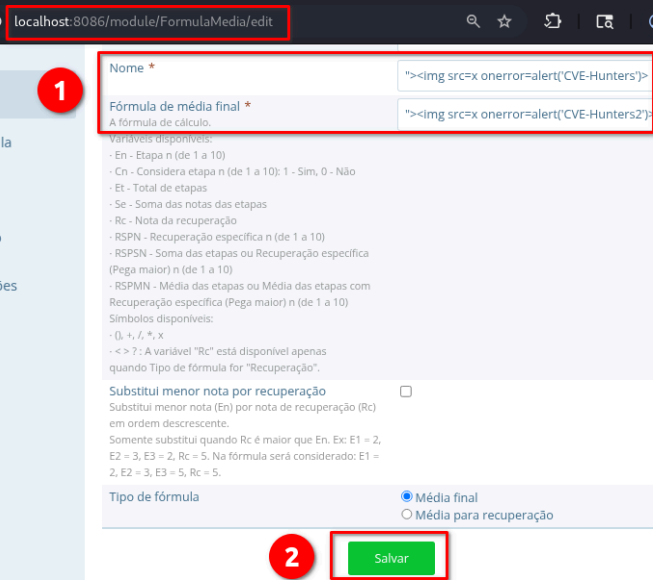
» Access the endpoint:/module/FormulaMedia/edit;
» Insert the payload in both fields:“Nome” and "Fórmula de média final";
» Scroll down and click on:“Salvar”
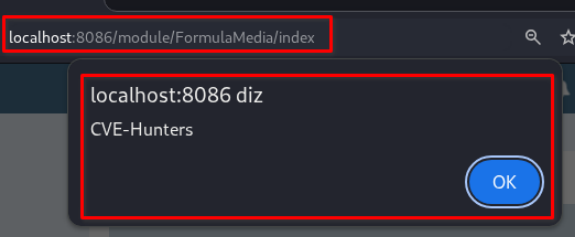
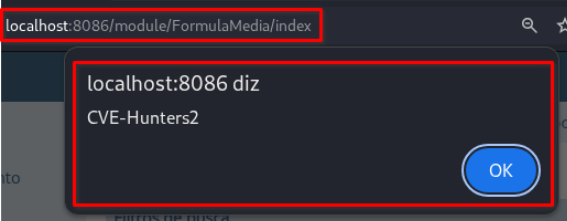
The /module/FormulaMedia/index page will automatically load, triggering the malicious payloads:
Parameter nome:
Parameter formulaMedia:
You can access the full technical report with all step-by-step evidence here: